
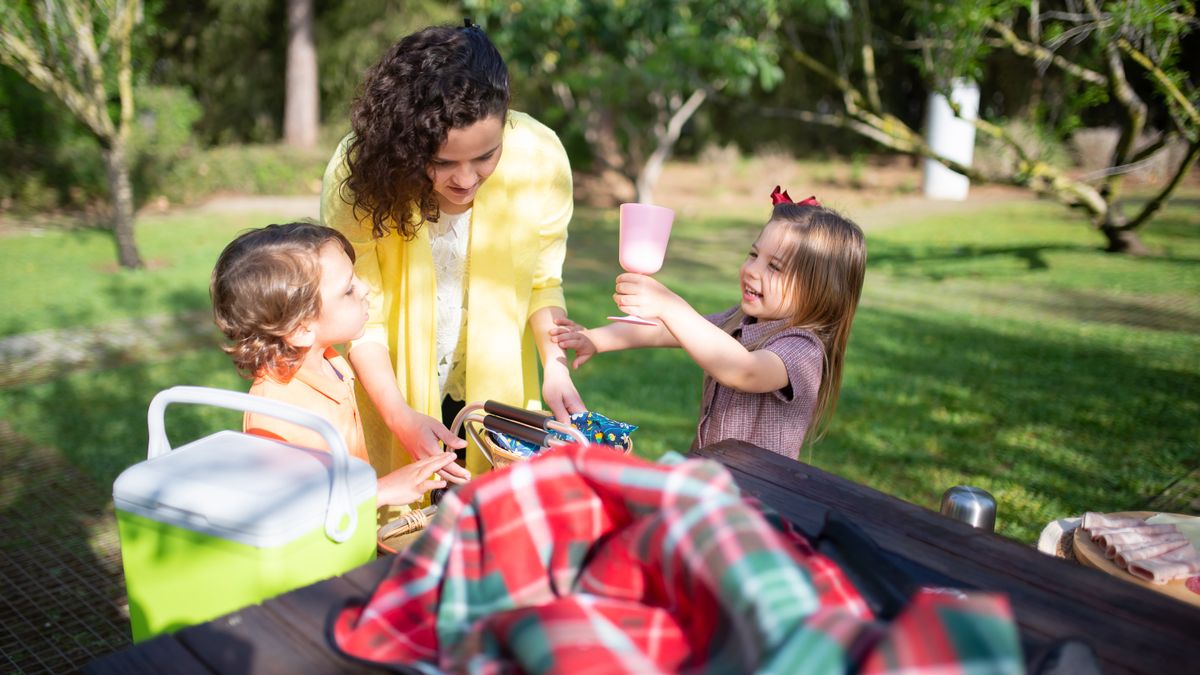
Reception is a big year. Your child is learning to hang up their own coat, change for PE, and manage the toilet without an adult standing nearby. Being able to dress themselves sits right at the centre of all of that, and it does far more than save you five minutes in the morning. Children who can tackle their own clothes tend to feel more capable at school, ask for help less often, and settle into the school day with more confidence.
It is worth remembering what we are asking of small hands. Buttons, zips, laces and buckles are fiddly even for adults in a hurry. At four and five, the small muscles in the fingers are still developing, and a child who can pull on a jumper today may struggle with it again next week. Progress here is rarely a straight line, and that is completely normal.
The single biggest thing you can do is make the wardrobe work with your child rather than against them. A few small swaps remove most of the daily frustration.
Dungarees, back-fastening dresses and tight tights are lovely, but they are best saved for days when you have time to help.
Mornings are not the moment for decision-making. Ten minutes of preparation the evening before can transform the whole routine.
If your child gets dressed more easily in the living room than the bedroom, let that happen. Comfort matters more than convention.
"What do you want to wear today?" is an invitation to overwhelm. Two clear options give your child real control without the paralysis.
Try phrases like, "You choose the top, I'll choose the trousers," or "The red jumper or the blue one?" You can also let your child choose the order rather than the items — socks first, jumper last, whatever suits them. The goal is a child who feels they are running the show, even when you have quietly set the boundaries.
Weather is worth teaching too. A quick look out of the window together, with a hand held out to check for rain, helps your child start making sensible choices for themselves.
Resist the urge to swoop in the moment something goes wrong. A jumper on backwards is not a crisis, and a child who notices it themselves learns more than one who is corrected instantly.
When you do praise, be specific. "You got your arms all the way in by yourself" tells your child exactly what they did well, far more than a general "good boy" or "well done". Keep your voice steady and your face relaxed, especially when they are struggling, because children pick up on our tension quickly.
During the learning phase, build in an extra ten or fifteen minutes. Rushing is the enemy of independence, and a hurried child will hand the job straight back to you. If frustration is building, offer a hand-over-hand start on the tricky bit and then let go again.
Some days it simply will not come together, and that is fine. Buttons and zips are best practised at the weekend, unhurried, when nobody needs to be anywhere. Tights are genuinely difficult for most five-year-olds, so save them for days when you can help.
If shoes end up on the wrong feet, teach your child to feel for the curve rather than look — it is a trick that works for years afterwards. And if your child suddenly wants you to dress them again after weeks of doing it alone, go along with it for a day or two. A little regression usually means they are working hard on something else, and the independence nearly always returns on its own.

Hi, my name is Anthony kuber. I am artist and fashion designer.
I love to travel and writing blogging.
Your email address will not be published. Required fields are marked *
Software Developer & Writer
Hey, I'm Diva, a developer and writer blending code and creativity. I'm driven by a deep curiosity and a relentless pursuit of excellence. Join me as I craft digital solutions and captivating stories.


