
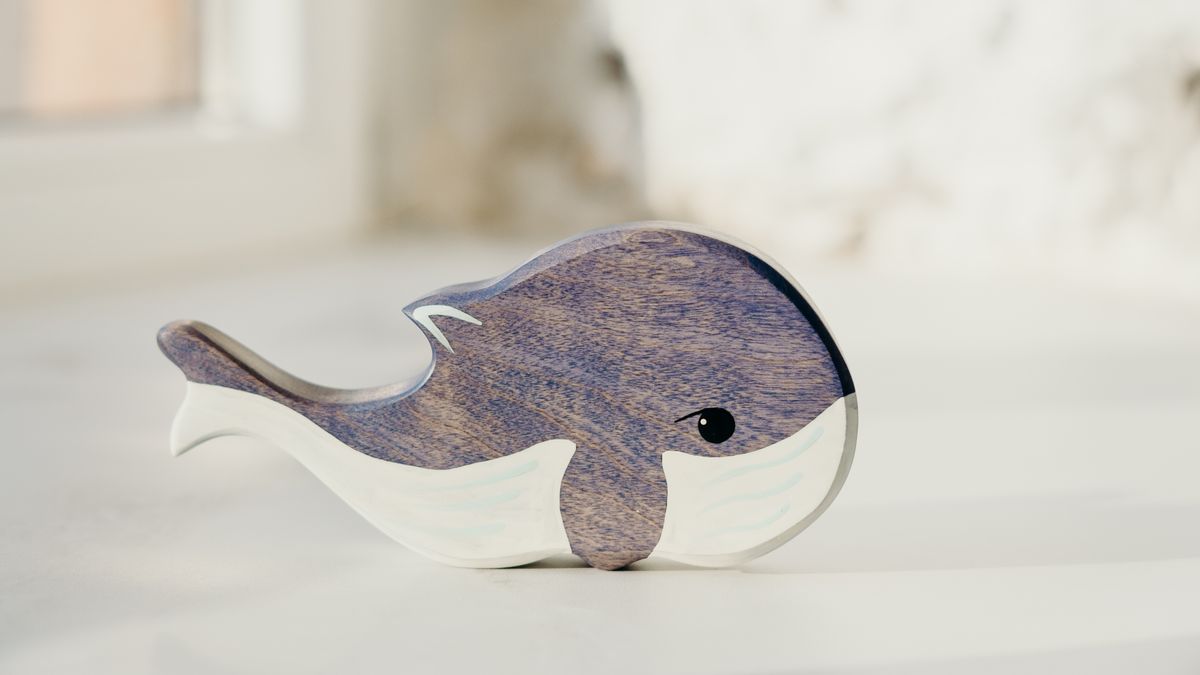
Small world play is exactly what it sounds like: a miniature scene, set up on a tray, in a tuff spot, or on a baking sheet, where your child can act out stories with small figures and objects. A farmyard, a woodland, a pirate cove, a bus stop, a vet's surgery — anything your child finds interesting can become a tiny world to explore.
It is one of those rare activities that ticks every box. It builds language and storytelling, supports emotional processing, encourages independent play, and gives you a genuine cup of tea while they are absorbed. Early years practitioners have relied on it for decades, and there is no reason it cannot work just as well on your kitchen table.
The tray provides a boundary, and boundaries help children focus. A shallow plastic tray, a large roasting tin, a washing-up bowl, or a tuff spot all work beautifully. Even a rimmed baking sheet will do for a first attempt.
Once you have your tray, think about the base layer. This is what makes the scene feel real:
You do not need all of these at once. One base layer plus one water feature is plenty to begin with.
You almost certainly already own everything you need. Small world figures do not have to be bought specially.
Keep a shoebox or a clear tub of these bits and pieces. When everything lives together, setting up a tray takes two minutes rather than twenty.
Here are some tried-and-tested combinations that reliably spark play.
Notice how little is actually in each tray. Restraint is your friend. A sparse scene invites your child to fill the gaps with imagination.
The trick to independent play is to set the scene, then step back. Resist the urge to narrate, direct, or tidy as they go.
Try these small habits:
Small world play stays interesting when it evolves. You do not need new toys — you need new combinations.
Swap the base layer: oats one day, blue fabric the next, shredded paper after that. Change one figure and the whole story shifts. Add a cardboard box and suddenly there is a cave, a garage, or a spaceship.
Rotate your loose parts box every few weeks. Put half the contents away in a cupboard and bring them out again a month later. Familiar objects feel new again after a break, and your child will rediscover them with fresh enthusiasm.
Finally, let the mess happen. Small world play is meant to be touched, tipped, mixed, and rebuilt. A dustpan and brush by the tray, or an old shower curtain underneath for the really messy scenes, will save your sanity. The play itself is worth every stray oat.

Hi, my name is Anthony kuber. I am artist and fashion designer.
I love to travel and writing blogging.
Your email address will not be published. Required fields are marked *
Software Developer & Writer
Hey, I'm Diva, a developer and writer blending code and creativity. I'm driven by a deep curiosity and a relentless pursuit of excellence. Join me as I craft digital solutions and captivating stories.


