
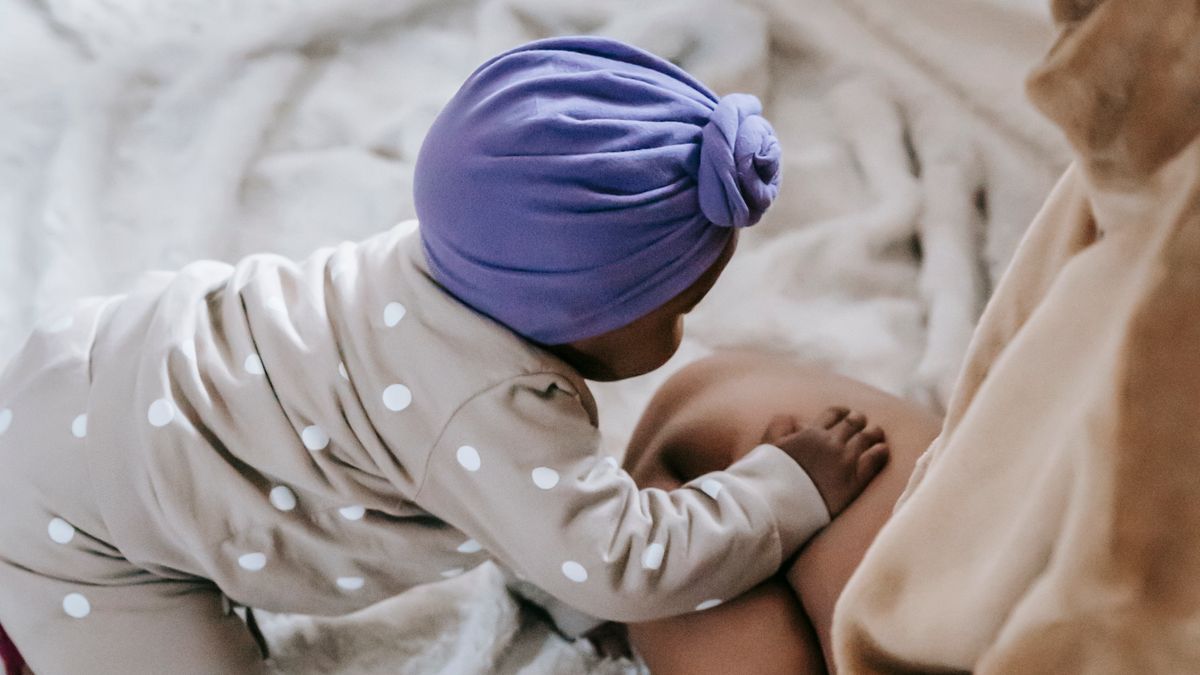
Children do not learn to speak through flashcards, apps or formal lessons. They learn through the ordinary, repetitive, slightly chaotic chatter of family life — the nappy changes, the supermarket trips, the hunt for a missing shoe. What matters most is not the number of words a child hears, but the number of conversational turns they take part in. A back-and-forth exchange, even a very short one, does more for language than an hour of listening to someone talk at them.
The good news is that this costs nothing and fits into the day you are already having. You do not need to set aside "speech time". You simply need to notice the small pockets of the day when talking happens naturally, and make the most of them.
Narrating what you are doing gives your child a running commentary of useful words in real context. It is sometimes called self-talk, and it sounds a little odd at first, but it works.
The trick is to choose two or three moments a day rather than narrating every second. Constant commentary becomes background noise, and children tune it out. Short bursts of genuine, interested talk land far better.
Use rich, real words too. There is no need to reduce everything to "nice" and "big". If your child is fascinated by diggers, tell them about the excavator and the tipper truck. Children love interesting vocabulary, and they will ask if they do not understand.
Closed questions — "Did you have a nice day?" — usually get a shrug or a single word. Open questions and wondering aloud give your child something to build on.
After you ask, wait. Five to ten seconds feels like a very long silence to an adult, but children need that time to process, find the word and shape the sentence. Resist the urge to fill the gap. If nothing comes, offer a model: "I think it might be a bus. What do you think?"
One of the most generous things you can do for your child's speech is let them finish. When a child is searching for a word, or saying "I goed to the park", it is tempting to jump in.
Instead, try recasting. You repeat their idea back in the correct form, without making it a correction: "You went to the park — that's right. What did you play on?" The child hears the right version, keeps their confidence, and the conversation carries on.
Cutting down background noise helps enormously. Turn the television off when nobody is watching, and keep music low in the car. Speech is much easier to learn when it is not competing with a screen.
It also helps to follow your child's attention rather than redirecting it. If they are staring at a squirrel, talk about the squirrel. Conversations about what a child is already interested in last far longer than ones we try to start.
Play is where language flourishes, especially pretend play. When a child is being a shopkeeper or a vet, they need words to run the story — and that need pushes language forward.
Comment rather than quiz. A steady stream of "What colour is that?" starts to feel like a test, and children switch off. "That's a bright red bus — it's the same as your jumper" keeps the exchange warm and two-way.
Children develop at very different rates. As a rough guide, many children have around twenty to fifty words by eighteen months, join two words together by their second birthday, and are using short sentences that familiar adults understand by around three. Bilingual children may take a little longer to build up words in each language, which is entirely normal.
If you have concerns — if your child is not turning towards sounds, has stopped using words they once had, or seems frustrated at not being understood — speak to your health visitor, GP or your child's nursery or childminder. Asking early is not overreacting. Support put in place sooner tends to work better, and most of the time there is nothing to worry about at all.
Above all, keep talking. The chats over breakfast, the running commentary in the car and the patient pause after a question are quietly doing more for your child's language than any lesson could.

Hi, my name is Anthony kuber. I am artist and fashion designer.
I love to travel and writing blogging.
Your email address will not be published. Required fields are marked *
Software Developer & Writer
Hey, I'm Diva, a developer and writer blending code and creativity. I'm driven by a deep curiosity and a relentless pursuit of excellence. Join me as I craft digital solutions and captivating stories.


